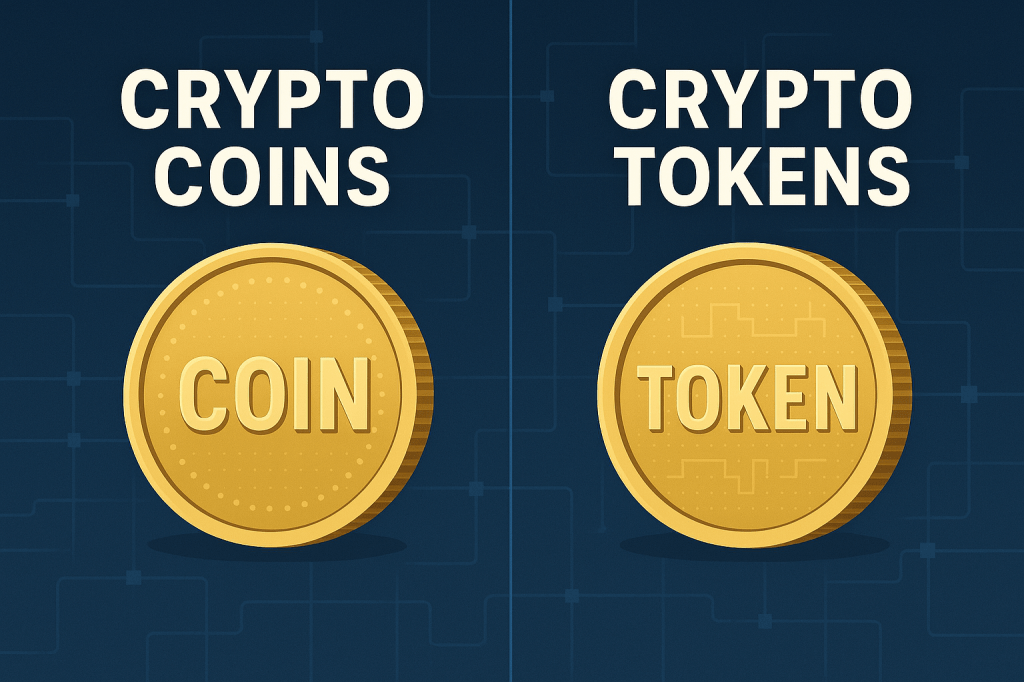
As the crypto world evolves, it introduces a rich vocabulary that can confuse newcomers — and even experienced users. One of the most common sources of confusion? The difference between crypto tokens and coins.
Although these terms are often used interchangeably, they have fundamental differences — and knowing them is essential for navigating DeFi, investing, and understanding blockchain ecosystems.
🪙 What Is a Coin?
A coin is a cryptocurrency that operates on its own blockchain. It serves as native digital money within that ecosystem.
🔹 Examples:
- Bitcoin (BTC) — runs on the Bitcoin blockchain
- Ethereum (ETH) — runs on Ethereum
- Solana (SOL) — native to the Solana network
💰 Common Use Cases:
- Medium of exchange
- Store of value
- Gas fees (to power transactions on their networks)
Coins function much like traditional currency in a digital format, and often are required to perform operations within their blockchain.
🎟️ What Is a Token?
A token, by contrast, is a cryptocurrency that is built on top of another blockchain. It does not have its own blockchain, but relies on an existing one — most commonly Ethereum.
🔹 Examples:
- USDT (Tether) — built on Ethereum, TRON, and other chains
- UNI (Uniswap) — Ethereum-based
- MANA (Decentraland) — Ethereum-based
🛠️ Common Use Cases:
- Utility tokens: Give access to services within a platform (e.g., BAT for Brave Browser)
- Governance tokens: Used for voting in DAOs (e.g., UNI for Uniswap)
- Security tokens: Represent real-world assets like stocks or real estate
- NFTs: A unique category of non-fungible tokens
⚙️ How Coins and Tokens Work Technically
| Feature | Coins | Tokens |
|---|---|---|
| Own Blockchain | ✅ Yes | ❌ No — built on another blockchain |
| Native Currency | ✅ Yes | ❌ No |
| Used for Fees | ✅ Yes | ❌ Fees are paid in native coin |
| Use Cases | Currency, gas, store of value | Access, governance, assets, DeFi |
🔗 Learn more about NFTs in our NFTs Explained Guide
🔐 Why This Distinction Matters for Investors
Understanding whether you’re investing in a coin or a token can impact:
- Security: Tokens are often more vulnerable to smart contract bugs
- Utility: Coins have wider acceptance for payments; tokens may be niche
- Growth potential: Tokens can represent fast-growing DeFi projects
- Fees: Using tokens requires native coins to pay for transactions (e.g., ETH for ERC-20 tokens)
🌐 Where You’ll Encounter Tokens vs. Coins
- In DeFi: Most DeFi protocols issue tokens
- On Exchanges: Tokens are listed under the same “cryptocurrency” umbrella, but operate differently
- In Wallets: Managing tokens requires supporting the parent blockchain
🔗 New to DeFi? Read: What Is DeFi? A Beginner’s Guide
🧠 Final Thoughts
Coins and tokens are both forms of cryptocurrency — but they serve different purposes and function on different levels of blockchain technology. As crypto continues to evolve, understanding the underlying architecture of these assets will help you make smarter, safer decisions.
Whether you’re trading, staking, or using decentralized applications, knowing the difference between coins and tokens is fundamental.
🔗 Ready to invest smarter? Check out our Crypto Investment Strategies

 Smart Finance Hub
Leave a reply to Tokenomics Explained: How Crypto Projects Design Value and Incentives – Smart Finance Hub Cancel reply