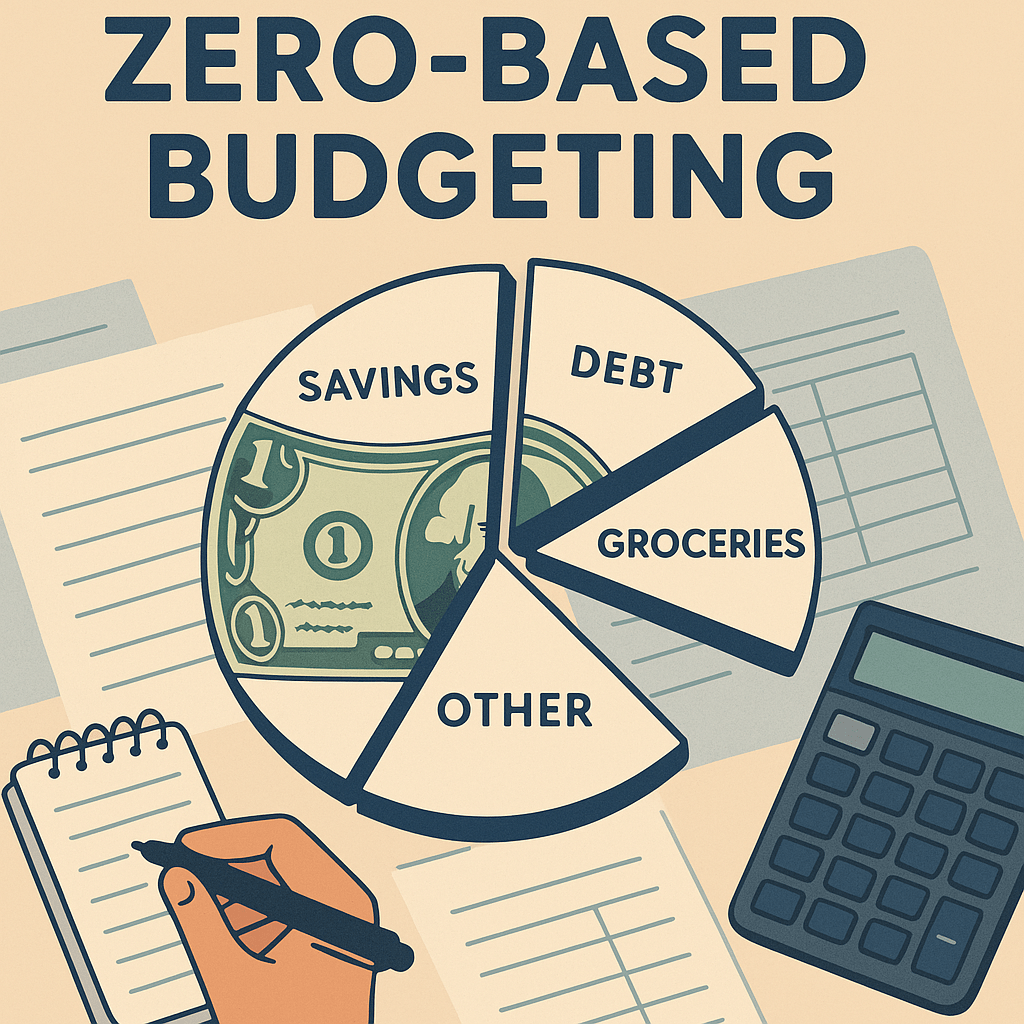
Do you ever feel like your paycheck disappears before the end of the month — and you’re not sure where it went? Zero-based budgeting (ZBB) is a proven method that ensures you assign every dollar a job — whether it’s paying bills, saving, investing, or spending with intention.
💡 What Is Zero-Based Budgeting?
Zero-based budgeting is a method where your income minus your expenses equals zero. That doesn’t mean you spend everything — it means that every dollar is allocated somewhere, even if it’s into savings or debt repayment.
🔗 New to budgeting? Start here: How to Create a Monthly Budget That Works for You
🧾 How It Works (Step-by-Step)
1. Calculate Your Total Income
Include:
- Salary after taxes
- Freelance or side hustle income
- Passive income (dividends, etc.)
2. List and Categorize All Expenses
- Fixed: Rent, utilities, subscriptions
- Variable: Groceries, gas, entertainment
- Financial goals: Debt repayment, savings, investments
3. Assign Every Dollar
Make sure every dollar is working. Examples:
- $200 to groceries
- $100 to savings
- $50 to credit card debt
- $0 left unassigned!
4. Track and Adjust Monthly
Use a budgeting app (like YNAB or EveryDollar) or a spreadsheet. Adjust based on actual spending and any income fluctuations.
🔗 Need help tracking spending? Check out our Best Budgeting Apps in 2025
🔄 Benefits of Zero-Based Budgeting
✅ Full Financial Awareness
You know exactly where your money goes.
✅ No Mindless Spending
Impulse buys become less frequent when every dollar is planned.
✅ Customizable Each Month
Income or priorities change? Just reassign your dollars.
✅ Perfect for Paying Off Debt
Make progress faster by planning intentional repayments.
🔗 Want to crush your debt? Read: How to Pay Off Debt and Regain Financial Freedom
⚖️ Zero-Based Budgeting vs Traditional Budgeting
| Feature | Zero-Based Budgeting | Traditional Budgeting |
|---|---|---|
| Assigns all income? | ✅ Yes | ❌ Often not all allocated |
| Savings built in? | ✅ Intentionally planned | ❌ Often “leftovers” |
| Adaptable monthly? | ✅ Highly flexible | ⚠️ Less dynamic |
| Time commitment? | Moderate (but powerful) | Minimal (but often vague) |
🔒 Common Mistakes to Avoid
- Forgetting irregular expenses like gifts or insurance
- Not tracking actual spending (budget ≠ reality!)
- Failing to budget for fun or leisure — it’s OK to spend intentionally
💰 Real-Life Example (Monthly Budget: $3,500 Income)
| Category | Amount |
|---|---|
| Rent & Utilities | $1,200 |
| Groceries | $400 |
| Transportation | $250 |
| Debt Payments | $300 |
| Savings & Investments | $500 |
| Entertainment | $150 |
| Insurance & Medical | $200 |
| Miscellaneous | $500 |
| Total | $3,500 |
🎯 Result: Zero unallocated dollars. Full control.
🧭 Tools to Help You Succeed
- Apps: YNAB, EveryDollar, Goodbudget
- Spreadsheets: Google Sheets templates (many are free)
- Journals/Trackers: If you prefer analog tools
🚀 Final Thoughts
Zero-based budgeting puts you in full control of your money. By telling every dollar where to go, you remove financial guesswork and build habits that lead to long-term success — whether you’re saving for a dream vacation, building an emergency fund, or paying off debt faster.
🔗 Make your budget work harder: Smart Spending Without Sacrificing Life Quality

 Smart Finance Hub
Leave a comment