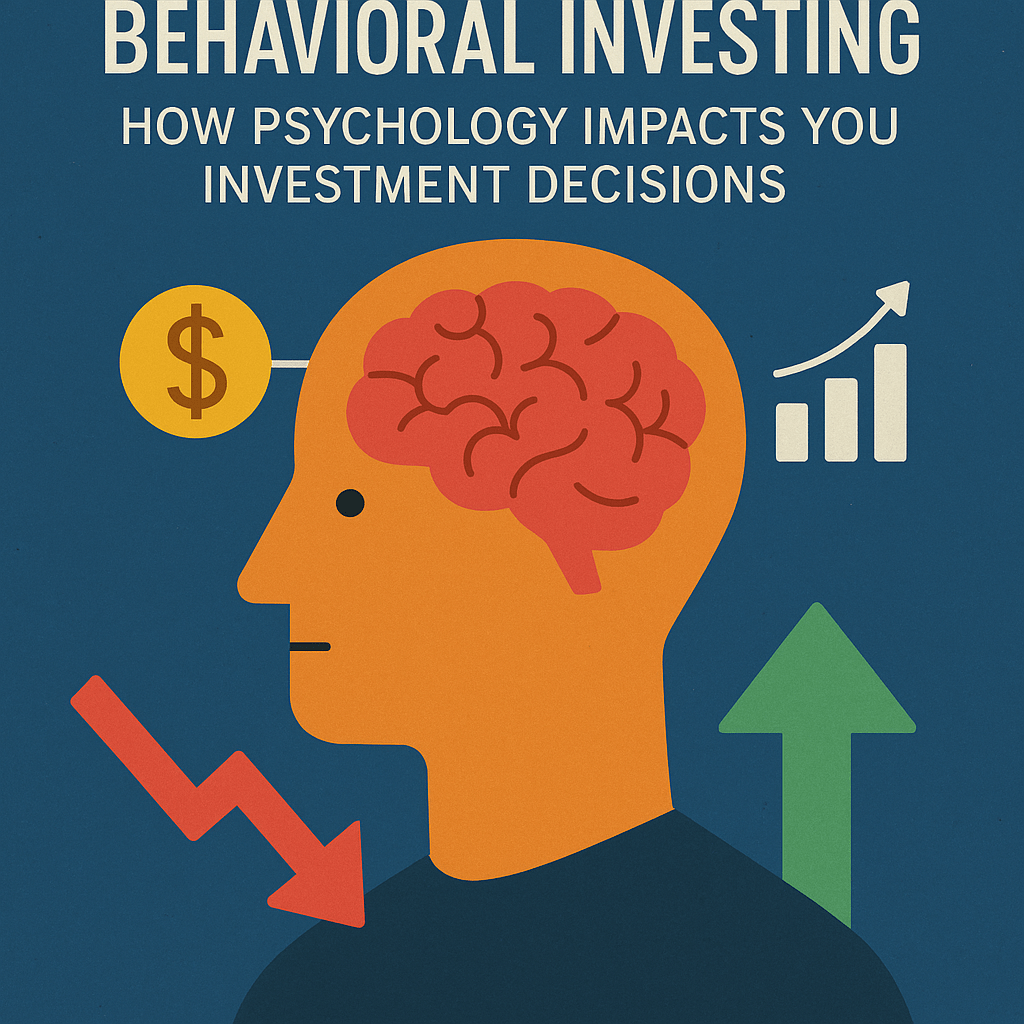
We like to think we’re logical investors. But the truth is, your brain might be the biggest threat to your portfolio.
Welcome to behavioral investing — the intersection of psychology and money. Understanding how emotions, biases, and mental shortcuts influence your decisions is crucial if you want to build long-term wealth (and avoid costly mistakes).
Let’s break it down.
🧠 What Is Behavioral Investing?
Behavioral investing looks at how cognitive biases and emotional reactions affect your investment decisions — often in ways that go against your best interests.
Even experienced investors fall victim to:
- Fear and panic during market drops
- Overconfidence during bull runs
- Herd mentality when “everyone else is buying”
- Regret from missed opportunities
These are natural human reactions, but left unchecked, they can ruin long-term returns.
🔁 Common Biases That Sabotage Investors
1. Loss Aversion
We hate losing money more than we enjoy gaining it. This often leads to holding losing stocks too long or selling winners too early.
2. Confirmation Bias
You only seek out information that supports what you already believe — ignoring red flags or alternative views.
3. Recency Bias
Recent events (like a market rally or crash) weigh more heavily than long-term trends — skewing your strategy.
4. FOMO (Fear of Missing Out)
Leads to jumping into overhyped assets at the peak of excitement — and usually right before the drop.
5. Anchoring
You fixate on irrelevant benchmarks (like “I bought at $50, so I’ll wait until it gets back to $50”) instead of reassessing the current situation objectively.
📊 How to Outsmart Your Own Brain
Behavioral investing doesn’t mean becoming emotionless — it means building systems and habits that protect you from emotional mistakes:
- Use Dollar-Cost Averaging to remove timing bias.
- Set up automatic rebalancing to stay aligned with your goals: Rebalancing Your Investment Portfolio.
- Diversify to reduce decision pressure: Diversification in Investing.
- Focus on long-term value, not short-term noise: The Ultimate Guide to Value Investing.
- Write down your investment thesis before buying anything — and review it quarterly.
🧘♂️ Final Thought
You don’t need to be perfect. You just need to be self-aware enough to design a system that protects you from yourself. Smart investing is less about beating the market — and more about not beating yourself up.
 Smart Finance Hub
Leave a comment