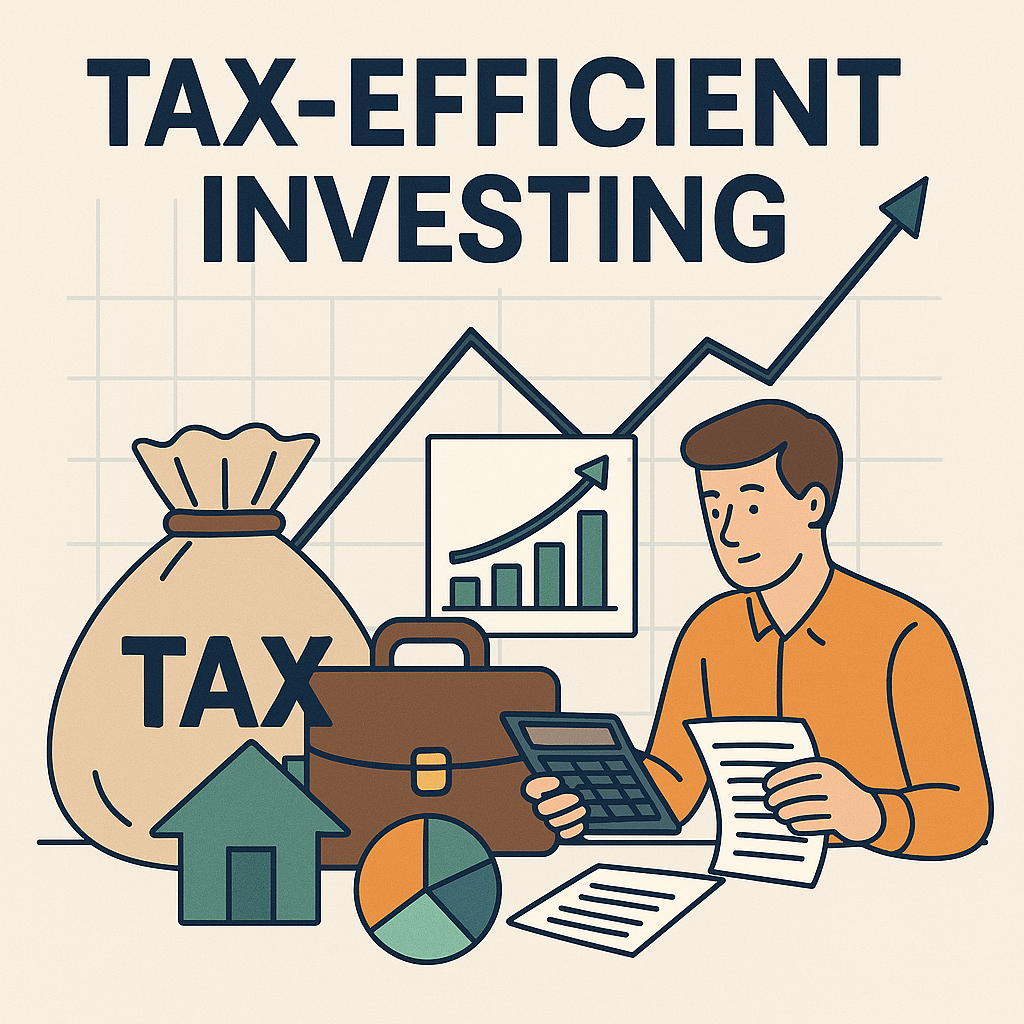
Investing isn’t just about picking the right assets — it’s also about keeping more of your gains. One of the most overlooked, yet essential, strategies for long-term wealth building is tax-efficient investing.
Why? Because taxes can quietly erode a large portion of your returns — especially if you’re not strategic about how, where, and when you invest.
🧠 What Is Tax-Efficient Investing?
Tax-efficient investing means structuring your investments in a way that minimizes the amount of taxes you pay, both now and in the future — without compromising on growth.
It includes:
- Using tax-advantaged accounts
- Placing assets in the right accounts (asset location)
- Minimizing capital gains
- Leveraging tax-loss harvesting and long-term strategies
🏦 Use Tax-Advantaged Accounts First
✅ Retirement Accounts (U.S. examples):
- 401(k) / Traditional IRA – Tax-deferred; pay taxes on withdrawal
- Roth IRA / Roth 401(k) – Tax-free growth and withdrawal
- HSA (Health Savings Account) – Triple tax benefit (if available)
These accounts grow tax-free or tax-deferred, giving your money more room to compound.
🔗 Planning for the future? Read Investing for Retirement
🔁 Asset Location: Where to Place Investments
Certain investments generate more taxable income than others. Here’s a general guideline:
| Asset Type | Best Account Type |
|---|---|
| Bonds, REITs | Tax-deferred (401k/IRA) |
| Dividend stocks | Taxable or Roth |
| Growth stocks | Roth IRA or Taxable |
| Actively managed funds | Tax-deferred |
| Index funds/ETFs | Taxable (low turnover) |
The goal? Put tax-inefficient assets in tax-advantaged accounts, and keep tax-efficient assets in taxable ones.
🔗 Learn more about asset mix in Diversification Strategies
💰 Capital Gains: Long-Term vs. Short-Term
Capital gains are taxed differently depending on how long you hold your investment:
- Short-term (<1 year): Taxed as ordinary income
- Long-term (1+ year): Lower tax rate (0–20%)
➡️ Tip: Hold assets at least a year to reduce your tax liability.
📉 Tax-Loss Harvesting
If you’ve lost money on an investment, you can sell at a loss to offset capital gains elsewhere. This is known as tax-loss harvesting.
Many robo-advisors (like Wealthfront or Betterment) automate this strategy.
💸 Dividends and Distributions
- Qualified dividends are taxed at long-term capital gains rates.
- Ordinary dividends are taxed as regular income.
Choose tax-efficient ETFs and funds with low turnover to minimize taxable distributions.
🔗 Read more on this in Dividend Investing
🔐 Municipal Bonds for Tax-Free Income
If you’re in a higher tax bracket, consider municipal bonds. Their interest is usually federal (and sometimes state) tax-free, making them great for taxable accounts.
🗓️ Timing Strategies Matter
- Avoid year-end fund purchases — they may trigger unwanted capital gains distributions.
- Harvest losses before year-end to offset gains.
- Plan sales to fall under long-term holding periods when possible.
🔗 Learn how to rebalance smartly in Portfolio Rebalancing Guide
🧮 Work With a Tax Professional (If Needed)
If your portfolio is growing, or you have complex investments (like real estate, crypto, or international stocks), a CPA or financial planner can help build a custom tax-efficient plan.
🚀 Final Thoughts
Smart investing isn’t just about choosing winners — it’s about keeping more of what you earn.
Tax-efficient investing allows your portfolio to grow faster, last longer, and support your goals with less stress. Whether you’re just starting or optimizing a mature portfolio, even small tweaks in tax strategy can lead to significant long-term results.
🔗 Don’t know where to begin? Start with How to Start Investing
 Smart Finance Hub
Leave a comment